
Best Beds for Guest Rooms in the UK
Buying a bed for a room that is only slept in a few nights a year is a different job from buying your own bed. You are choosing for unknown sleepers, for a room that has to earn its keep the other fifty weeks of the year, and for a space that is often the smallest bedroom in the house.
The short answer: for most UK homes, the best guest room bed is a double or small double ottoman bed or a divan bed with drawers, with a medium firmness mattress. It sleeps one guest or a couple in comfort, it swallows the spare bedding and the clutter the spare room usually collects, and it leaves the room usable when nobody is staying. If your spare room is very small, or it doubles as a home office, a day bed or a good sofa bed may serve you better.
What makes a good guest room bed?
Before comparing bed types, it helps to judge every option against the same four tests. A guest bed that passes all four is rarely a disappointment.
Comfort for strangers. Your guests cannot try the bed before they arrive, and they will not tell you if they slept badly. A mattress that suits the widest range of sleepers and a proper full size sleeping surface matter more here than in your own bedroom, where you chose every detail yourself.
Storage for the empty weeks. A guest room is rarely just a guest room: it holds the ironing, the decorations, the suitcases and the out of season clothes. A bed with storage built in keeps all of that out of sight, so the room is guest ready in ten minutes.
A size the room can actually take. The best bed is the biggest one the room can hold while still leaving space to walk around it, open the door and reach a wardrobe. A king size bed crammed into a box room makes the whole room feel cramped and makes changing the sheets a wrestling match.
Easy to keep fresh. Spare bedding needs somewhere to live, the mattress needs airing between visits, and the bed should be simple to strip and remake. Beds with storage solve the first problem; a washable mattress protector solves the rest.
What size bed is best for a guest room?
Size is the first decision, because it narrows everything else. The right choice depends on who usually stays and how wide the room is.
| Bed size | Mattress size | Best for a guest room |
|---|---|---|
| Single | 3 ft, 90 x 190 cm | Box rooms, solo guests, teenagers, rooms under about 2.4 m wide |
| Small double | 4 ft, 120 x 190 cm | Compact guest rooms, solo guests who like space, snug couples |
| Double | 4 ft 6 in, 135 x 190 cm | The default for most guest rooms, couples and solo guests alike |
| King | 5 ft, 150 x 200 cm | Large guest rooms, couples who want proper elbow room, taller guests |
A double is the safe default. At 135 cm wide it sleeps a couple without complaint and gives a solo guest generous space, and it fits a typical British second bedroom of around 3.4 by 3.6 metres with room to spare. A small double is the smart compromise when the room is narrower: 15 cm narrower than a double, it still sleeps two at a push and one person in real comfort. A single only makes sense when the room is genuinely tight, or when you mostly host one person at a time.
Whatever size you choose, measure the room with the frame in mind, not just the mattress. Upholstered frames add several centimetres on each side for the headboard and the frame itself, and you need around 60 cm of clear floor on at least one side to get in and out comfortably. Mark the footprint on the floor with masking tape before you order. Our UK bed size guide covers every standard size in detail.
The best types of guest bed, compared
There is no single best guest bed, only the best one for your room and how often you host.
| Bed type | Best for | Watch out for |
|---|---|---|
| Ottoman bed | Guest rooms that double as storage space; spare bedding lives inside the bed | Needs clear floor at the foot or side for the base to lift |
| Divan bed with drawers | Everyday access to stored items; a classic, tidy look | Drawers need clear floor beside the bed to open |
| Day bed with trundle | Rooms used as a sitting room or office by day; sleeping two at short notice | The pull out bed usually has a thinner mattress |
| Sofa bed | No spare room at all; guests sleep in the living room | Comfort varies widely; try the mattress before you buy |
| Folding bed | Very occasional guests; the bed stores in a cupboard between visits | Best as a backup, not a regular guest bed |
Ottoman beds: the guest room storage hero
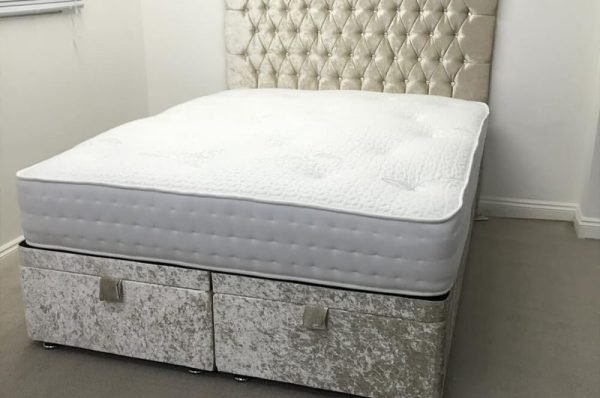
If your spare room earns its keep as a store room for most of the year, an ottoman bed is hard to beat. The whole mattress platform lifts on gas pistons to reveal one large open compartment underneath, and the storage it gives is generous: a double ottoman holds around 380 litres, roughly the contents of a small wardrobe, while a small double holds around 300 litres and a king around 440 litres. Spare duvets, pillows, bed linen, suitcases and out of season clothes all disappear inside the bed, and the room looks like a proper bedroom again instead of an overflow cupboard.
That storage is exactly what a guest room needs. The spare bedding lives inside the very bed it serves, so making the bed up is a five minute job: lift the base, take out the sheets, make the bed. When guests leave, everything goes straight back in.
Ottoman beds are made to order in every standard UK size from single to super king, and in fabrics from velvet and chenille to faux leather, so the bed can match the rest of the room rather than looking like a storage unit. Our ottoman bed buying guide explains gas lift mechanisms, end lift versus side lift, weight limits and what fits inside in full. Browse the full ottoman beds range to see the styles available.
Divan beds with drawers: the classic guest room choice
Divan beds have been the default guest room bed in Britain for decades. The solid timber base is sturdy, the bed sits at a comfortable height for guests of all ages, and the drawers give you somewhere to keep the spare sheets and pillows within easy reach.
Drawers suit items you reach for often. If the guest room also stores everyday things, being able to open a drawer without lifting the mattress is genuinely more convenient. A two drawer divan keeps the spare bedding tidy; a four drawer divan can swallow a surprising amount of clutter.
The one thing to check is floor space beside the bed. Drawers need clear floor to open, so a divan works best when at least one long side of the bed is free. In a very tight box room where the bed sits against the wall on both sides, an ottoman that lifts from the foot is usually the better call. See the full divan beds range for sizes from single to super king.
When a day bed or sofa bed makes more sense
Not every home has a spare room to dedicate to guests. If your guests sleep in the living room, the study or a room that works as an office by day, a bed that changes shape during the day is the practical answer.
A day bed looks like a sofa against the wall by day and sleeps one person at night, and many designs include a trundle bed underneath that pulls out to sleep a second guest. Because day beds use standard single mattresses, the comfort is far better than a camp bed, and the room keeps its daytime purpose.
A sofa bed is the answer when there is no spare bedroom at all. By day it is a normal sofa; at night it unfolds into a double bed. The comfort gap between a cheap sofa bed and a good one is large, so try the mattress if you can, and look for a proper mattress rather than a thin foam pad folded inside the frame.
Folding beds, also called put up beds, have their place too: as a backup for the nights when two sets of guests arrive at once, or in a home where guests stay only once or twice a year. Modern folding beds are far more comfortable than the old camp beds, but for regular hosting a proper bed with a real mattress will always win.
Choosing a guest mattress
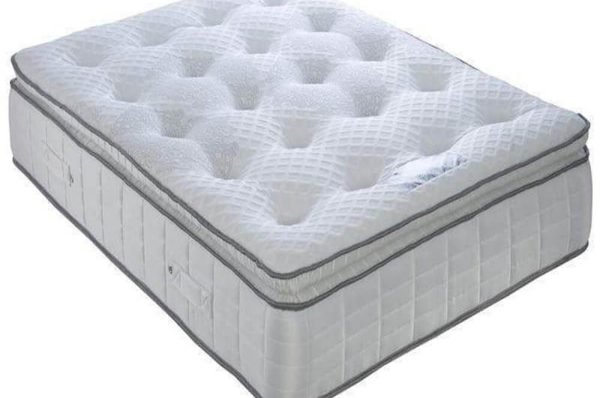
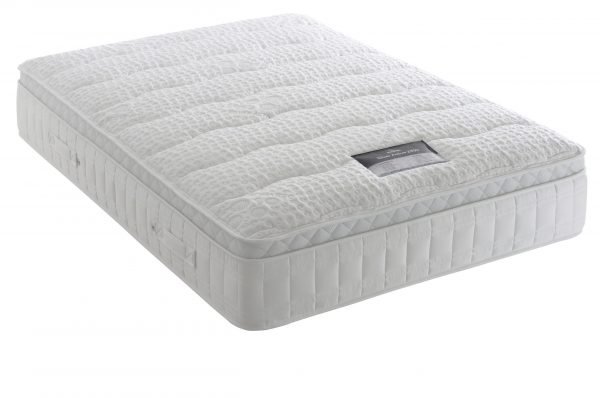
Guests have unknown preferences, so the aim is a mattress that suits the widest range of sleepers rather than one tuned to a single person. That points to a medium firmness mattress in most cases: soft enough for side sleepers, supportive enough for back sleepers, and comfortable for the occasional front sleeper too. A mattress topper in the cupboard lets guests who prefer a softer feel add a plush layer without you buying a second mattress.
As for type, both main options work well in a guest room. Pocket sprung mattresses sleep cooler, respond when sleepers change position, and give strong edge support, which matters when a guest is sleeping near the edge of an unfamiliar bed. Memory foam absorbs movement beautifully, so it suits couples sharing the guest bed. A pocket sprung mattress with foam comfort layers gives you a bit of both. Our guide to pocket sprung versus memory foam mattresses compares the two in detail.
Two practical points are easy to miss. First, buy a breathable, washable mattress protector: it keeps the mattress fresh between visits and it is far easier to wash than the mattress itself. Second, provide two pillows of different firmness, one firmer and one softer. Guests will pick the one that suits them.
There is no need to buy the most expensive mattress for a bed used a few nights a month. A well made mid range mattress gives genuine comfort, and the money saved is better spent on the frame and the bedding.
Small guest room layout tips
Most UK guest rooms are the smallest bedroom in the house, so layout matters as much as the bed itself.
Push the bed against the longest wall, headboard on the wall. That leaves the most usable floor and makes the bed easy to make. If the room is very narrow, placing one long side against the wall is fine for a guest bed and frees up the rest of the room.
Keep the path from the door to the bed clear. Guests arrive with a bag, often in the dark, and a room they can walk through without sidestepping furniture feels bigger than it is.
Use the walls, not the floor. A wall mounted light frees the bedside table, hooks on the back of the door replace a clothes rail, and a narrow shelf holds a glass of water and a phone charger. Every item that leaves the floor makes the room feel larger.
The finishing touches guests remember
The bed is the main event, but the details are what guests mention afterwards. Freshly laundered bedding, a spare blanket folded at the foot of the bed, a carafe of water and a glass, and a phone charger by the bed cost almost nothing and make the stay feel considered. Keep the room at a comfortable temperature that guests can control, and keep a dedicated guest set, sheets, duvet cover, pillowcases and towels, laundered and stored together inside the bed itself. When the next visit is announced, the room is ready in minutes.
Frequently asked questions
What size bed is best for a guest room?
A double, 4 ft 6 in or 135 x 190 cm, suits most guest rooms: it sleeps a couple or a solo guest in comfort and fits a typical British second bedroom. A small double, 4 ft or 120 x 190 cm, is the best choice when the room is narrower, and a single, 3 ft or 90 x 190 cm, suits box rooms and solo guests.
Is an ottoman bed good for a guest room?
Yes, it is arguably the best use of an ottoman bed. The storage holds the spare bedding all year, so the room stays tidy when empty and is guest ready in minutes. A double ottoman gives around 380 litres of storage, about the same as a small wardrobe.
What mattress firmness is best for guests?
Medium firmness suits the widest range of sleepers, since it works for side, back and front sleepers. Add a mattress topper for guests who prefer a softer feel, and offer two pillows of different firmness so each guest can choose.
Do I need an expensive mattress for a guest room?
No. A good mid range mattress is right for a bed used a few nights a month. Spend the difference on the frame, the storage and quality bedding, which your guests will notice far more than a flagship mattress.
Is a sofa bed comfortable enough for guests?
A good sofa bed with a proper mattress is comfortable for a night or two, and it is the right choice when there is no spare room. A cheap sofa bed with a thin fold out pad is not. If guests stay regularly, a proper bed in a spare room is always more comfortable.
How do I make a small guest room feel bigger?
Choose the smallest bed that still sleeps your guests comfortably, keep the floor clear, push the bed against the longest wall, and store the spare bedding inside the bed itself. Wall lights, door hooks and a narrow shelf all save floor space.
Final word
The best guest room bed is the one that makes your guests sleep well and makes your life easy the other fifty weeks of the year. For most UK homes that means a double or small double ottoman bed or divan bed with drawers, a medium firmness mattress, and the spare bedding stored inside the bed itself. Measure the room and choose the size it can genuinely take.
Browse the full bed ranges at Beds and Beyond, where every bed is handcrafted to order in sizes from single to super king, in a wide choice of premium fabrics. We deliver free across the UK, and our Early Black Friday sale gives 25% off all Luxury Beds with code BLACKFRIDAY25 until 30 November.