
Wingback Beds: Are They Worth It? Style and Comfort Guide
If you love the look of a tall, padded headboard with sides that curve gently forward, you have probably already fallen for a wingback bed. The question is whether that beautiful shape is worth choosing over a simpler upholstered bed or a practical divan. For many UK buyers, the answer is yes, provided the room is large enough and you actually enjoy spending time sitting up in bed. A wingback bed is at its best when it becomes the centrepiece of the bedroom, a comfortable place to read, relax and unwind, not just a place to sleep. If you have a very small box room, or you prefer a low and minimal look, a simpler frame may suit you better. This guide explains what a wingback bed really is, how it feels to live with, how to size it, which fabrics work best, and when it is worth the extra presence in your room.
What is a wingback bed?
A wingback bed takes its name from the wings on either side of the headboard. Instead of a flat padded panel, the headboard extends forward at the sides, partly wrapping around the top of the bed. The design comes from wingback chairs, where the wings were originally meant to shelter the sitter from draughts. On a bed, the effect is similar: a cocooning, sheltered feeling at the head end, with pillows held neatly in place.
Most wingback beds are fully upholstered. That means the headboard, and often the frame, is padded and covered in fabric. Common finishes include deep button detailing, where buttons are pulled into the padding to create a tufted pattern, and smooth panelled designs for a cleaner, more modern look. Chesterfield style wingbacks use deep buttoning across the headboard and wings for a classic, luxurious feel, while slim modern wingbacks use straighter lines and shallower wings for rooms that need a lighter touch.
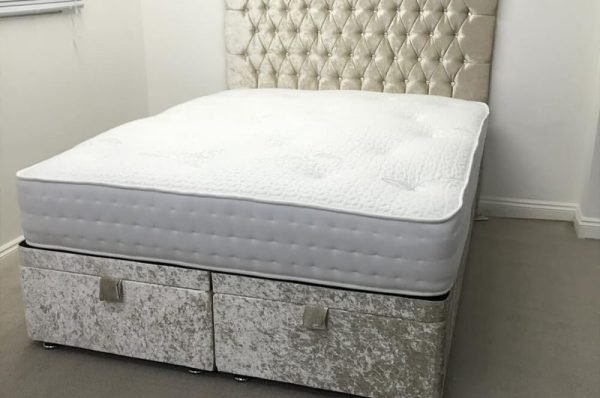
At Beds and Beyond, wingback beds are made to order in sizes from Single to Super King, upholstered by hand in premium fabrics including velvet, chenille, crushed velvet and faux leather, with deep button detailing and sturdy solid timber frames. That made to order approach means you can choose the size and fabric that fits your room, rather than settling for a standard finish.
The comfort case: why sitting up in bed feels different
Sleeping comfort depends mainly on your mattress, not your bed frame. Where a wingback earns its keep is everything you do in bed while you are awake. Reading, watching television, working on a laptop, having a morning coffee, or simply sitting up and relaxing all feel more supported when the headboard is tall, padded and shaped around you.
A flat headboard gives you something to lean against. A wingback gives you something to settle into. The wings support your shoulders and stop pillows slipping sideways, so you are not constantly rearranging them. Against a cold outside wall, the wings also create a cosier pocket of warmth, reducing the draught you can feel when you sit up on a winter evening. For anyone who reads in bed every night, that difference is noticeable within days.
Padding depth matters here. A properly padded headboard feels soft and supportive when you lean back. A thinly padded decorative panel can look similar in a photograph but feels hard and flat in use. When you compare wingback beds, ask about the padding and the frame construction, not just the fabric colour. A solid timber frame and generous padding are what turn a statement headboard into a comfortable one you will still love in five years.
Style: from classic luxury to modern minimal
One reason wingback beds have stayed popular is their flexibility. The same basic shape can look traditional, glamorous or quietly modern, depending on the fabric, the buttoning and the proportions.
Classic wingbacks suit period homes, traditional bedrooms and hotel inspired schemes. Deep buttoning, a tall headboard and a rich fabric such as velvet or chenille create a grand focal point. They pair well with wooden furniture, warm lighting and layered bedding.
Modern wingbacks are slimmer and simpler. A lower wing, a smooth unbuttoned panel and a neutral fabric in grey, cream or sage can look calm and contemporary without dominating the room. These designs work well in new build bedrooms where a full traditional wingback might feel too heavy.
Colour choice changes the whole effect. Pale fabrics make a tall headboard feel lighter and help a smaller room feel open. Dark velvet in bottle green, navy or charcoal creates drama and works best when the room has enough space and light to carry it. If you are unsure, order fabric samples and look at them in your own bedroom light before you commit. A colour that looks soft in a showroom photograph can look very different beside your curtains and carpet.
Wingback vs standard upholstered bed vs divan: at a glance
| Feature | Wingback bed | Standard upholstered bed | Divan bed |
|---|---|---|---|
| Headboard | Tall, padded, with forward wings | Padded, usually flat | Low or separate headboard, often simple |
| Sitting up comfort | Excellent, sheltered and supportive | Good, padded but open at sides | Depends on headboard chosen |
| Visual impact | High, a clear bedroom centrepiece | Medium, neat and versatile | Low, discreet and practical |
| Room presence | Needs more width and depth | Moderate | Smallest footprint |
| Storage | Depends on base, some designs pair with ottoman or drawer bases | Depends on base | Drawers or ottoman bases common |
| Best for | Readers, relaxers, statement bedrooms | All rounders who want comfort without drama | Small rooms and everyday storage |
Sizing and measuring: will a wingback fit your room?
Wingback headboards add width and depth beyond the mattress, so measuring the mattress size alone is not enough. Upholstered frames can add roughly 8 to 15 cm beyond the mattress on each side, and the wings add depth at the head end. Always check the overall frame dimensions on the product page, then measure your room and your route into the room.
Use the standard UK mattress sizes below as your starting point, then add the frame allowance and allow walking space.
| UK bed size | Mattress size | Good for |
|---|---|---|
| Single | 90 cm by 190 cm | Children, teenagers, guest rooms and box rooms |
| Small double | 120 cm by 190 cm | Solo sleepers who want extra width, spare rooms |
| Double | 135 cm by 190 cm | Couples in average size bedrooms |
| King | 150 cm by 200 cm | Couples who want proper elbow room, taller sleepers |
| Super king | 180 cm by 200 cm | Couples who value space, larger bedrooms |
For a full breakdown of every UK size and who each size suits, see our UK bed size guide. If your room is tight, our guide to the best beds for small bedrooms in the UK explains when a storage bed or a smaller size is the smarter choice, and why a tall wingback is usually best saved for a room with breathing space.
Fabrics: velvet, chenille, crushed velvet and faux leather
Fabric changes how a wingback looks, feels and wears. At Beds and Beyond, the wingback range is available in velvet, chenille, crushed velvet and faux leather, so it is worth matching the fabric to your lifestyle, not just your colour scheme.
Velvet feels soft, warm and luxurious, with a rich pile that catches the light. It suits a statement bedroom and looks beautiful in deep colours. It does need regular care: a weekly vacuum with an upholstery attachment and a soft brush will keep the pile looking fresh, and spills should be blotted, never scrubbed.
Chenille is soft and textured, with a cosy feel that works well for family bedrooms. It is generally more forgiving day to day than velvet and suits homes where the bed gets a lot of use.
Crushed velvet has a glamorous, light reflecting finish that adds depth and drama. It is a popular choice for a hotel inspired look, especially in lighter or jewel tones.
Faux leather gives a clean, modern finish and is easy to wipe clean, which can suit households with young children or pets. It looks best in simple, unbuttoned designs where the smooth surface can shine.
Storage: can you have a wingback and storage too?
Yes, in many designs. Some wingback beds are paired with an ottoman lift base, which turns the whole space under the mattress into one large storage compartment, ideal for spare duvets, pillows and seasonal clothing. Others use drawer bases for quick everyday access to clothes and bedding. The right choice depends on your room layout.
Ottoman bases lift vertically, so they need no floor clearance at the sides to open, which suits beds pushed against a wall. They do need headroom above the bed for the platform to rise. Drawer bases need roughly 60 cm of clear space beside the bed for the drawers to open fully, but they are quicker to use every day.
If storage is your top priority, read our divan vs ottoman comparison first. It breaks down capacity, ease of access, room layout and price in detail, so you can decide whether a wingback with a storage base, or a simpler storage bed, fits your home better. Our ottoman bed range is also worth browsing if you want maximum hidden storage with a luxurious upholstered finish.
When a wingback is not worth it
Honesty matters here. A wingback is not the right bed for every room, and buying one for the wrong room is how a beautiful bed ends up feeling like a mistake.
A wingback may not be worth it if your bedroom is very small. The wings add width and depth, and a tall headboard in a box room can make the space feel crowded rather than luxurious. In that case, a divan or a low profile upholstered bed will serve you better.
It may also not suit you if you prefer a low, minimal look, or if you rarely sit up in bed. If you only use the bed for sleeping, you will pay for presence and comfort you do not use. A simpler padded headboard gives you the same sleeping comfort for less visual weight.
Access matters too. Tall one piece headboards are harder to manoeuvre up narrow staircases and through tight doorways than a divan base that arrives in two parts. Measure the route in before you order, and check whether the headboard design suits your home.
Finally, think about upkeep. Velvet and crushed velvet look stunning but need regular brushing and vacuuming. If you want a completely low maintenance fabric, chenille or faux leather may be a better match for a busy household.
How to choose the right wingback bed
Start with the room, not the photograph. Measure the space, check the doorways, and decide the largest mattress size that still leaves comfortable walking space. Then choose the wing profile: a full traditional wing for a grand room, or a slimmer modern wing for a standard bedroom.
Next, choose the fabric for your lifestyle. Velvet for luxury and drama, chenille for cosy everyday use, crushed velvet for glamour, faux leather for easy cleaning. Order samples if you can, and view them in daylight and evening light.
Finally, think about the base. Do you need storage? Would an ottoman lift base or drawers make your bedroom work harder? If not, a standard base keeps the focus on the headboard itself. Browse the full wingback bed range to compare sizes and fabrics, and explore the wider luxury bed collection if you want to see how wingbacks sit alongside other statement designs.
Frequently asked questions
What is a wingback bed?
A wingback bed has a tall, padded headboard with side wings that extend forward, partly enclosing the head end of the bed. The wings give the bed its distinctive shape, support you when sitting up, and help keep pillows in place.
Are wingback beds comfortable?
Yes, especially for sitting up. The tall padded headboard and wings support your back and shoulders when reading or relaxing. Sleeping comfort depends mainly on your mattress, so pair your wingback frame with a mattress that suits your sleep style.
Do wingback beds suit small bedrooms?
They can work in a standard bedroom if you choose a slimmer profile and the right mattress size, but they are not ideal for very small box rooms. The wings add width and depth, so measure the full frame and allow walking space before you order.
What is the best fabric for a wingback bed?
It depends on your lifestyle. Velvet and crushed velvet suit a luxurious statement look, chenille suits cosy family use, and faux leather suits easy cleaning. Order fabric samples and check them in your own room light before deciding.
Can I get a wingback bed with storage?
Many wingback designs can be paired with ottoman lift bases or drawer bases. Ottoman bases give the largest single storage compartment, while drawers give quicker everyday access. Check the base options on the product page for the design you like.
Are wingback beds still in style?
Yes. Wingback beds remain popular because the shape is classic and adaptable. Traditional deep button designs suit period and luxury bedrooms, while slim modern versions suit contemporary homes, so the style works across a wide range of interiors.
The verdict: are wingback beds worth it?
For readers, relaxers and anyone who wants their bedroom to feel like a retreat, a wingback bed is absolutely worth it. The comfort when sitting up, the cocooning shape and the visual impact are hard to match with a flat headboard. Choose the right size for your room, pick a fabric that fits your lifestyle, and check the frame construction, and you will have a bed that looks beautiful and feels even better.
If your room is very small, or you prefer a minimal look and rarely sit up in bed, a simpler frame will serve you just as well. The best bed is not the grandest bed, it is the one that fits your room and how you actually live.
Ready to find yours? Browse the wingback bed range at Beds and Beyond, handmade to order at our Batley and Dewsbury base, with free UK delivery and a wide choice of fabrics from Single to Super King. Explore the luxury bed collection too, and find the centrepiece your bedroom deserves.