If you have started shopping for a pocket sprung mattress, you will have noticed the numbers straight away: 1000, 2000, 2800, 3500, and sometimes far more. It is easy to assume that the biggest number must be the best mattress, but spring count is only part of the story. The short answer is that most UK sleepers are well served by 1000 to 2000 pocket springs in a king size mattress, with higher counts adding finer contouring and better motion isolation rather than a completely different level of support.
This guide explains what those numbers actually mean, how 1000, 2800 and 3500 spring counts compare, and how to choose the right count for your body weight, sleeping position and budget.
What Is a Pocket Spring, and What Does the Count Mean?
A pocket spring is an individual steel spring sewn into its own fabric pocket. Because the springs are not wired together, each one moves independently, pressing down only where your body presses on it. That is why pocket sprung mattresses contour to your shape and disturb a partner far less than an old-fashioned open-coil mattress, where movement ripples across the whole surface.
The spring count is simply the number of those individual springs inside the mattress. One important detail catches many shoppers out: spring counts are almost always quoted for a king size mattress, which measures 150 x 200 cm in the UK. The same mattress in a double will contain fewer springs, and a super king will contain more, because the spring density stays roughly the same while the area changes. That is normal, and it does not mean the smaller size is a lower-quality mattress. Always compare counts in the same bed size.
Spring Counts at a Glance
| Spring count (king size) | What it generally offers | Best suited to |
|---|---|---|
| Around 1000 | Even, reliable everyday support | Single sleepers, lighter sleepers, guest rooms and tighter budgets |
| 1500 to 2000 | Refined contouring and a more responsive feel | Most couples and everyday main-bedroom use |
| Around 2800 | Finer, more precise support, often from layered springs | Couples, restless sleepers and those wanting extra pressure relief |
| Around 3500 | Deep, body-conforming support with a luxurious feel | Main bedrooms, couples and shoppers wanting a premium specification |
These bands are a guide, not a grading system. A well-made 1000-spring mattress will support you far better than a poorly made mattress with a much higher count.
1000 Pocket Springs: The Everyday Sweet Spot
A 1000-spring mattress is the recognised starting point for a good-quality pocket sprung mattress in the UK. At this level, the springs are large enough to give distinct, individual support, and the mattress contours noticeably better than a basic open-coil design.
For a single sleeper, a lighter sleeper, or a guest bedroom, 1000 springs are usually plenty. Couples on a budget also do well here, because each spring still responds independently, so one partner’s movement is contained far better than on a connected spring unit.
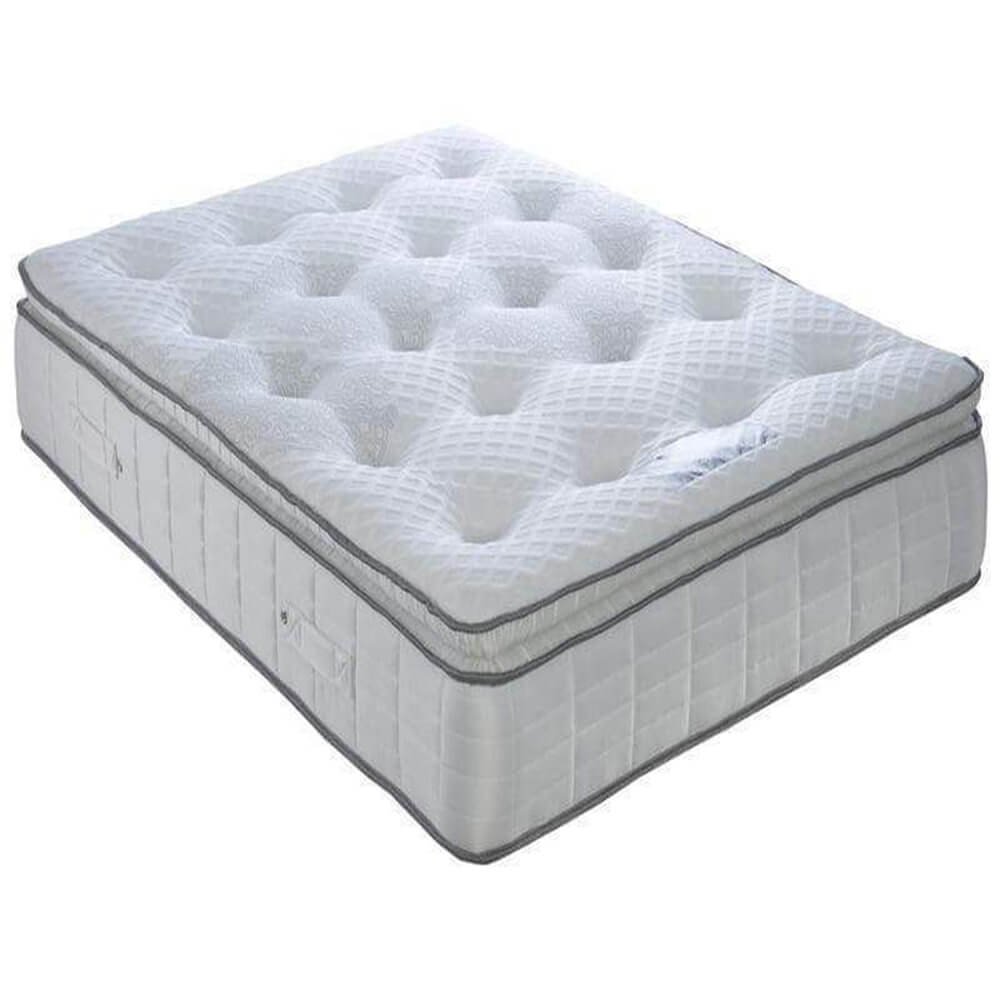
Beds and Beyond’s Pillow Top 1000 pocket sprung mattress is a good example of this tier: 1000 individual springs with a plush pillow top, giving side sleepers cushioning over a supportive core. If you like a traditional sprung feel and do not want to overthink the specification, this is a sensible place to start.
2000 Pocket Springs: The All-Rounder
Stepping up to around 2000 springs brings a more refined feel. With more springs sharing your weight, each one has less work to do, so the mattress responds in smaller, more precise increments as you move. Side sleepers often notice the difference at the shoulders and hips, where the surface gives more gradually, and couples benefit from slightly better motion isolation.
For most main bedrooms, 2000 springs hit the point of diminishing returns in the best sense: you get a genuinely more responsive mattress without paying for layers of very small springs you may never notice. If you share a bed and want one mattress that suits two different sleeping styles, this is often the count to aim for.
2800 Pocket Springs: When Layers Come Into Play
A 2800-spring mattress usually is not a single layer of 2800 large springs. In most cases, it combines a main spring unit with a second layer of smaller mini springs, often in the comfort layer on top. The Silver Active 2800, for example, pairs 2000 pocket springs with 800 mini springs, giving 2800 springs working together.
That layered construction is the point. The main springs do the heavy lifting of support, while the smaller springs add finer contouring near the surface, which many sleepers experience as extra pressure relief and a more cushioned, responsive top feel. Couples who are easily disturbed by movement also tend to benefit, because more independently moving springs mean motion is broken up into smaller pockets rather than travelling across the bed.
A 2800 count is worth considering if you want a step up from a standard mattress and you notice pressure at your shoulders or hips, or if your partner’s restlessness wakes you. It is not, however, a requirement for good support: a heavier sleeper may still be better served by a firmer, well-built 2000-spring mattress than by a softer 2800-spring one.
3500 Pocket Springs: The Premium Tier
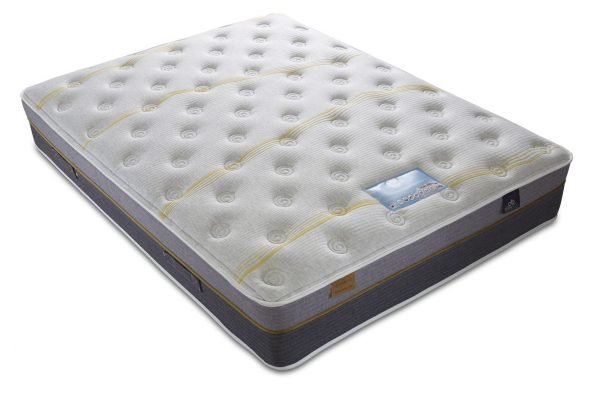
At 3500 springs, you are looking at a premium, layered mattress built for deep contouring and a luxurious feel. The Splendour 3500 iCloud mattress, for instance, combines 3500 pocket springs with Cloud Lite Foam technology, designed to feel lighter than traditional foam while retaining less heat than memory foam.
What you are paying for at this level is refinement: a surface that adapts in very fine increments, excellent motion isolation for couples, and a comfort layer that feels indulgent without the slow, sinking feeling of an all-foam mattress. For a main bedroom mattress you plan to keep for years, and where comfort is a priority over budget, 3500 springs make sense.
What a 3500 count does not do is fix the wrong firmness. A soft 3500-spring mattress will still feel soft, and a firm one will still feel firm. If the tension is wrong for your body weight and sleeping position, no spring count will rescue it.
Why More Springs Are Not Always Better
Beyond around 2000 springs in a single layer, manufacturers have to fit more springs into the same king size area, which means the springs get smaller. Very high counts, into the thousands beyond 3500, are achieved with multiple layers of mini or micro springs. Those smaller springs can improve fine contouring and motion isolation, but each individual spring is doing less work, and the gains become progressively harder to notice.
There is also a trade-off in wire thickness. A single layer of larger springs can be made from thicker, stronger wire, which is part of why a well-built 2000-spring mattress can feel more supportive than a very high-count mattress built from very fine springs. This is why experienced mattress makers often say to focus on the build as a whole, not the headline number.
In short: treat 1000 as the floor for a good pocket sprung mattress, 1000 to 2000 as the sweet spot for most people, and anything above that as added refinement rather than a necessity.
Spring Count Is Not the Whole Mattress: Gauge, Tension and Fillings
Three other factors matter at least as much as the count, and they explain why two mattresses with the same spring count can feel completely different.
Spring gauge. Gauge describes the thickness of the spring wire. A lower gauge number means thicker wire, which generally gives a firmer, more durable feel, while a higher gauge number means thinner wire and a softer, more yielding feel. A heavier sleeper usually benefits from thicker wire, regardless of whether the count is 1000 or 2000.
Tension. Mattresses are often described as soft, medium or firm. Tension is set by the wire gauge and the spring design, not by the count alone. A 2000-spring mattress can be soft or firm depending on its tension, so always check the firmness rating alongside the count.
Fillings and comfort layers. The layers above the springs decide the first impression: breathable natural fibres such as wool and cotton sleep cooler, while foams add cushioning. A pillow top, for example, adds a plush surface over a supportive spring unit, which suits side sleepers who want cushioning at the shoulders and hips without losing the responsive sprung feel underneath.
If you are torn between pocket springs and foam altogether, our guide to pocket sprung vs memory foam mattresses explains how the two feels compare, side by side.
How to Choose: A Quick Decision Guide
Choose around 1000 springs if: you sleep alone, you are a lighter sleeper, the mattress is for a guest room, or you want reliable support at a sensible price.
Choose 1500 to 2000 springs if: you share a bed, you want a responsive all-rounder for everyday use, or you change position during the night and want the surface to keep up with you.
Choose around 2800 springs if: you want finer pressure relief, your partner’s movement disturbs you, or you like a cushioned, layered feel over a supportive core.
Choose around 3500 springs if: you want a premium main-bedroom mattress, you prioritise deep contouring and motion isolation, and the budget stretches to a luxury specification.
Look beyond the count if: you are a heavier sleeper, in which case firmer tension and thicker wire matter more than chasing a higher number, or if you sleep hot, in which case the breathability of a sprung core and natural fillings may matter more than the count itself.
Whatever count you choose, check the count in your actual bed size before comparing brands. Our UK bed size guide explains how single, double, king and super king sizes compare, so you can be sure you are comparing like with like.
Frequently Asked Questions
Is 1000 pocket springs enough?
Yes, for most sleepers. 1000 springs in a king size mattress is the widely accepted minimum for a good-quality pocket sprung mattress, giving even, individual support. Single sleepers, lighter sleepers and guest rooms are usually well served at this level, while couples or heavier sleepers may prefer 1500 to 2000 for extra refinement.
Is there a big difference between 1000 and 2000 pocket springs?
There is a noticeable difference in refinement, but not a doubling of support. A 2000-spring mattress contours in finer increments and isolates movement slightly better, which couples and side sleepers often appreciate. A 1000-spring mattress still gives proper pocket sprung support; the upgrade is about feel and responsiveness rather than fixing a weakness.
What does a 2800 spring count actually mean?
It usually means layered springs: a main spring unit plus a layer of smaller mini springs in the comfort layer. The two layers add up to 2800, with the main springs providing support and the mini springs adding finer surface contouring and pressure relief.
Is a 3500 spring mattress worth it?
It can be, if you want a premium feel and will use the mattress as your main bed for years. You get deep contouring, excellent motion isolation and a luxurious comfort layer. It is not essential for good sleep, though, and the wrong firmness at 3500 springs will still feel wrong, so choose tension first and count second.
Does a higher spring count mean a firmer mattress?
No. Firmness is set mainly by spring gauge and tension, not by the number of springs. A high-count mattress can be soft, and a 1000-spring mattress can be firm. Always check the firmness rating alongside the spring count.
How do I compare spring counts between brands?
Compare counts in the same bed size, check whether the count is a single layer or layered mini springs, and look at the tension and fillings too. A count quoted for a king size will always look bigger than the same mattress quoted for a double, so ask for the count in your size if a listing does not state it.
Find Your Spring Count at Beds and Beyond
The right spring count is the one that matches how you sleep, not the biggest number on the page. Start with 1000 to 2000 springs for everyday comfort, step up to a layered 2800 or a premium 3500 if you want finer contouring and better motion isolation, and always weigh tension and fillings alongside the count.
Beds and Beyond handcrafts its beds and mattresses to order at its Dewsbury, West Yorkshire workshop, in sizes from Single to Super King, with free UK delivery. Browse the mattress ranges, compare the spring counts in your size, and choose the feel that suits you best. Based in Batley and Dewsbury, Beds and Beyond delivers beds and mattresses all over the United Kingdom.