

Pocket Sprung vs Memory Foam Mattress: Which Is Right for You?
If you are shopping for a new mattress in the UK, the choice usually comes down to two contenders: pocket sprung or memory foam. They feel completely different to sleep on, and the right one depends on how you sleep rather than which is “better” on paper.
Here is the short answer. Choose a pocket sprung mattress if you sleep hot, like a responsive and slightly bouncy feel, or change position during the night. Choose memory foam if you want deep pressure relief, mostly sleep on your side, or share your bed with a restless partner. And if you want a bit of both, a pocket sprung mattress with foam comfort layers gives you the best of both worlds — more on that below.
What Is a Pocket Sprung Mattress?
A pocket sprung mattress is built around hundreds or thousands of individual steel springs, each sewn into its own fabric pocket. Because the springs are not wired together like old-fashioned open-coil mattresses, each one moves independently, flexing only where your body presses down. The result is support that responds point by point — firmer push-back where you are heaviest, gentler give where you are lighter.
Above the spring unit sit layers of fillings — everything from breathable traditional fibres to modern foams — which create the comfort feel, from firm and supportive to soft and cushioned. The spring count matters: a 1,000-spring mattress gives even, everyday support, while counts of 2,000 and above add a more refined, progressive feel with extra responsiveness. Open space between the springs also lets air circulate freely through the mattress, which is why pocket sprung designs are known for sleeping cool.
What Is a Memory Foam Mattress?
Memory foam is a dense, viscoelastic foam that softens in response to body heat and weight, then slowly moulds around your shape. Instead of pushing back like a spring, it cradles you — spreading your weight across a wider area and cushioning pressure points at the shoulders, hips and knees.
That close-contouring “hug” is what memory foam is famous for, and it is also why it absorbs movement so effectively: when your partner turns over, the energy dissipates into the foam rather than rippling across the bed. The trade-off is responsiveness. Memory foam is slower to spring back, so changing position takes a little more effort, and the dense structure can trap warmth — though open-cell and gel-infused foams have improved this in recent years.
Pocket Sprung vs Memory Foam: Side-by-Side Comparison
| Feature | Pocket Sprung | Memory Foam |
|---|---|---|
| Feel | Responsive, supportive, gently bouncy | Close-contouring, cushioned, body-hugging |
| Support style | Springs push back and adapt point by point | Foam moulds around you and spreads weight |
| Temperature | Sleeps cooler — air circulates between springs | Can sleep warmer; cooling foams help |
| Partner disturbance | Good, especially with higher spring counts | Excellent — among the best for motion absorption |
| Changing position | Easy — the surface springs back quickly | Slower — the foam takes a moment to respond |
| Edge support | Usually stronger, depending on construction | Varies by model and foam density |
| Lifespan | Around 8–10 years with proper care | Around 8–10 years; quality foams hold shape well |
| Best for | Hot sleepers, restless movers, traditional feel | Side sleepers, couples, pressure relief |
Temperature: Which Sleeps Cooler?
This is one of the clearest differences between the two. A pocket sprung mattress is naturally breathable: the gaps between the individual springs create channels that air moves through, carrying body heat and moisture away from the surface. If you tend to overheat at night — or your bedroom faces south and holds the day’s warmth — a pocket sprung design is usually the more comfortable choice.
Memory foam, by contrast, is dense by nature, and traditional formulations can feel noticeably warmer. Modern mattresses tackle this with open-cell structures, gel infusions and breathable covers, and these do make a genuine difference — but all else being equal, pocket springs still have the edge on airflow by design.
Which Is Better for Couples?
If your partner’s tossing and turning wakes you up, memory foam is hard to beat. It absorbs movement almost completely, so one person’s midnight position change barely registers on the other side of the bed.
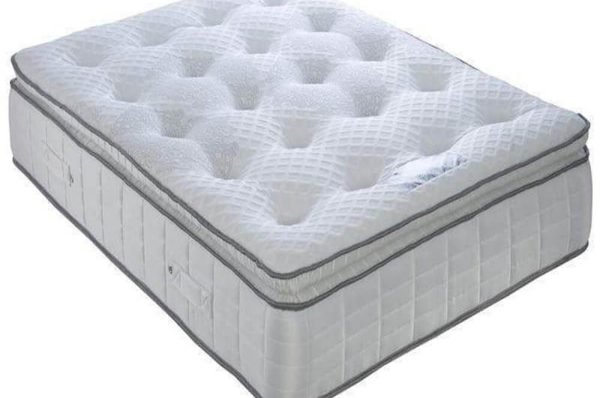
Pocket sprung mattresses perform far better than old connected-coil designs, because each spring moves independently and contains motion locally. Higher spring counts isolate movement more effectively. Our Pillow Top 1000 pocket sprung mattress, for example, uses 1,000 individual springs that respond to each sleeper separately, keeping partner disturbance to a minimum — while still giving you the bounce and airflow that foam cannot match.
The deciding factor is how light a sleeper you are. Easily disturbed? Lean towards memory foam. Only bothered by major movement? A quality pocket sprung mattress will serve you well.
Which Suits Your Sleeping Position?
Side sleepers often favour memory foam, because the contouring cushions the shoulders and hips where pressure concentrates. That said, a pocket sprung mattress with a soft comfort layer or pillow top — like our Pillow Top 1000 with its plush 32cm profile — gives side sleepers cushioning plus easier movement.
Back sleepers tend to do well on either type, provided the tension is right. Medium to medium-firm suits most back sleepers, supporting the lower back without letting the hips sink too far.
Front sleepers generally need a firmer, more supportive surface to keep the spine aligned, which often points towards a firmer pocket sprung model.
Combination sleepers who change position through the night usually prefer pocket sprung, simply because the responsive surface makes turning over effortless rather than a slow push out of a foam cradle.
Durability: Which Lasts Longer?
With normal use and proper care, expect around 8–10 years from either type. Springs can gradually lose tension over the years, while foams can soften — in both cases, quality of construction matters more than the category. A well-made mattress of either type will comfortably outlast a cheap one.
Care makes a difference too. Rotate your mattress regularly (head to foot) to even out wear — many modern mattresses are single-sided, so check before flipping. A breathable mattress protector guards against moisture and dust, and a proper supportive base prevents premature sagging.
Can’t Decide? The Best-of-Both Option
You do not have to choose one camp. Many of the most popular mattresses sold in the UK today combine a pocket spring core with foam comfort layers — the responsive support and airflow of springs, topped with the cushioning of foam.
Our Splendour 3500 iCloud mattress takes exactly this approach: 3,500 pocket springs for deep, body-conforming support, wrapped in Cloud Lite Foam technology that is manufactured to feel lighter than traditional foam while retaining less heat than memory foam. And the Silver Active 2800 pairs 2,000 pocket springs with 800 mini springs in a cushioned top — 2,800 springs working together for pressure relief with proper spinal support. If your shortlist keeps flip-flopping between the two types, this middle ground is usually where the search ends.
Quick Decision Checklist
- You sleep hot → pocket sprung
- Your partner disturbs you → memory foam (or high-spring-count pocket sprung)
- You are a side sleeper wanting pressure relief → memory foam or pocket sprung with a pillow top
- You change position a lot → pocket sprung
- You like a traditional, bouncy feel → pocket sprung
- You like a cocooned, weightless feel → memory foam
- You want a bit of everything → pocket sprung with foam comfort layers
Above all, trust your body over the label. Firmness ratings and spring counts are useful guides, but comfort is personal — the right mattress is the one that lets you fall asleep easily and wake up without stiffness.
Frequently Asked Questions
Which is better for back pain: pocket sprung or memory foam?
There is no universal answer, because it depends on the cause and your sleeping position. Memory foam is often chosen by people who want contouring pressure relief around the hips and shoulders, while pocket sprung suits those who prefer firmer, more responsive support. If you have persistent back pain, it is worth speaking to a clinician before choosing — a mattress supports sleep, it does not treat medical conditions.
Do pocket sprung mattresses sleep cooler than memory foam?
Yes, in most cases. Air circulates through the open structure of the spring unit, dissipating heat naturally. Memory foam is denser and retains more warmth, though modern cooling foams and breathable covers have narrowed the gap.
Which type of mattress lasts longer?
Both last a similar length of time — around 8–10 years with proper care. Build quality, fillings and how well you look after the mattress matter far more than whether it contains springs or foam.
Are pocket sprung mattresses good for side sleepers?
They can be, especially models with a soft comfort layer or pillow top that cushions the shoulders and hips. Side sleepers who want maximum contouring sometimes prefer memory foam, but many are perfectly comfortable on a medium-tension pocket sprung mattress.
Do memory foam mattresses need turning?
Most modern memory foam mattresses are single-sided and should be rotated head-to-foot rather than flipped. Pocket sprung mattresses vary — some are single-sided too — so always check the care label rather than assuming.
Can I use either mattress type on any bed frame?
Broadly yes, provided the base is supportive and the slats are not too widely spaced. Divan bases, slatted frames and ottoman bases all suit pocket sprung and memory foam mattresses. If you are buying a new bed at the same time, it is worth choosing the frame and mattress together so the comfort feel matches.
Browse Mattresses at Beds and Beyond
Every mattress in our mattress range is handmade to order at our Dewsbury, West Yorkshire workshop, in sizes from Single to Super King and a choice of comfort feels. Whether you land on the responsive support of pocket springs or want the cushioned middle ground of a spring-and-foam design, you will find it there — with free UK delivery, so your new mattress arrives without the delivery headache.



Comment (1)